- Home
- /
- Industries
What we recommend, by industry
The same size bag behaves differently depending on what goes in it. These are the specs we normally suggest, based on the orders we actually run.
| Sector | Bag type | Paper weight | Usual size (in) | What matters most |
|---|---|---|---|---|
| Bakery & cake | Food-grade twisted handle | 80–100 GSM | 8 × 10 | Food-grade paper, fits the box |
| Grocery & produce | Food-grade pouch | Food-grade paper | 8 × 10 | Cost per thousand |
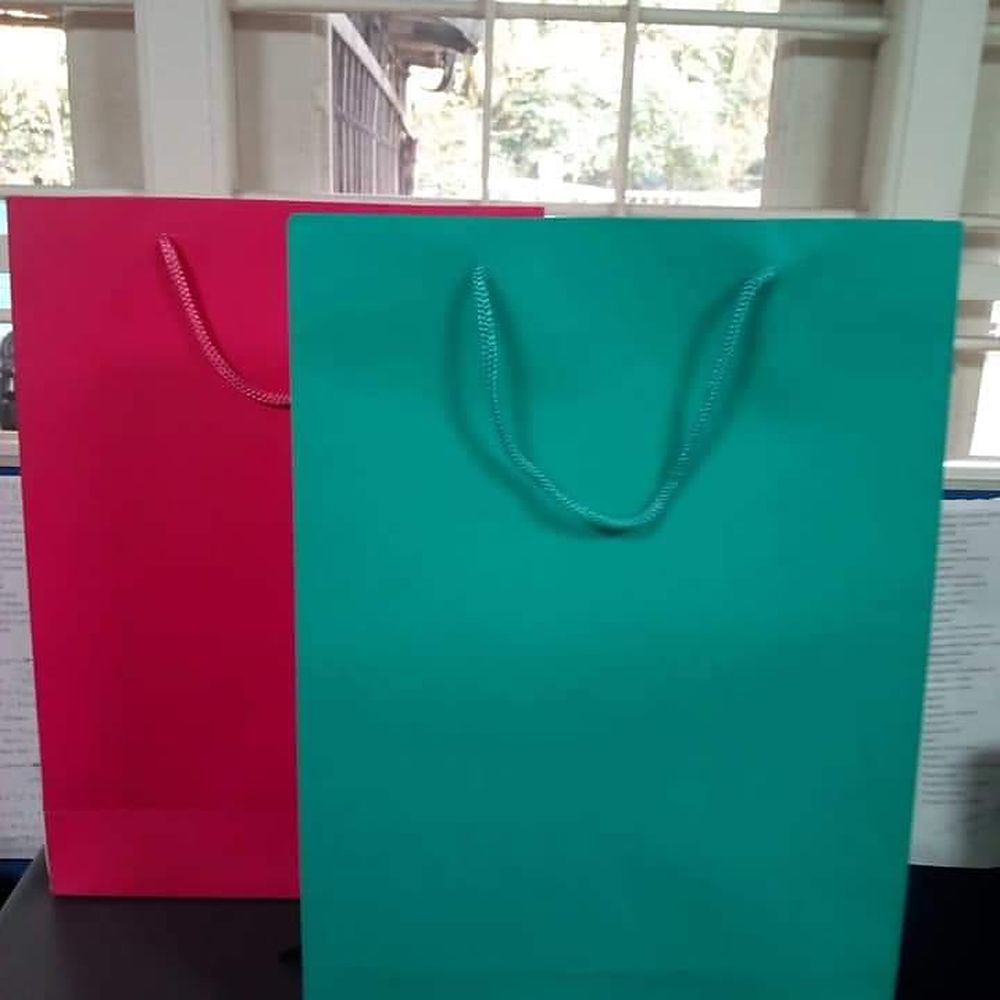
| Hotels & takeaway | Parcel bag, twisted handle | 100–150 GSM | 10 × 14 | Handle strength when loaded |
| Retail & apparel | Twisted or rope handle | 150–250 GSM | 12 × 16 | Print quality, shelf presence |
| Corporate & conference | Rope handle, laminated | 170–250 GSM | 12 × 16 | Logo reproduction, reuse |
| Weddings & events | Twisted handle, printed | 100–150 GSM | 10 × 14 | Short run, fast turnaround |
| Gifting & festive | All-over printed | 150–250 GSM | 10 × 14 | Full colour artwork |
| Promotions & giveaways | Non-woven tote | Non-woven fabric | Made to order | Reusability, cost per unit |
The detail
Three things people get wrong on a first order.
Choosing paper that is too light
Dropping to a lighter GSM to save cost, then losing bags to torn handles at the counter. Tell us the weight of the contents and we will tell you the floor.
Forgetting the gusset
The gusset decides how much actually fits and how the bag looks when full. Adjusting it is often cheaper than moving up a whole size.
Not flagging food contact
If food touches the paper directly, say so at enquiry stage. A standard retail bag is not the same product as a food-grade bag and cannot be converted later.
Tell us what goes in the bag.
Describe the contents and the weight, and we will recommend a spec rather than just quoting what you asked for.